0 Favorites 0 likes 6,253 浏览 1451 个字


  高句丽是我国东北古代少数民族地方政权,始建于西汉元帝建昭二年(前37年),由朱蒙建国于汉玄菟郡高句丽县,初期都城定为纥升骨城,在今辽宁省桓仁县境内五女山。汉平帝元始三年(3)第二位王琉璃明王迁都于国内城,即今吉林省集安市。北魏始光四年(427),第二十位王长寿王迁都于今朝鲜平壤。唐高宗总章元年(668),在唐朝政权和新罗的联合打击下灭亡。高句丽民族曾活跃于中国东北和东北亚的历史舞台上长达705年,传28代王,创造了具有本民族鲜明特色的文化。集安作为高句丽早中期政治、经济、文化中心长达400余年,其境内保留着丰富的高句丽遗存和遗物。
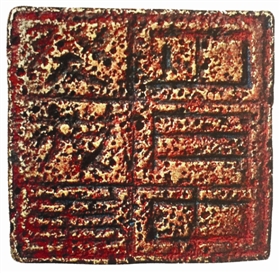
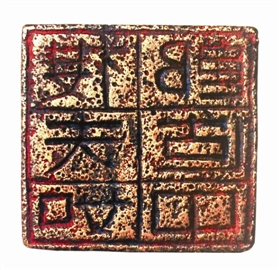
图1 铜印正背面

图2 印章钤本
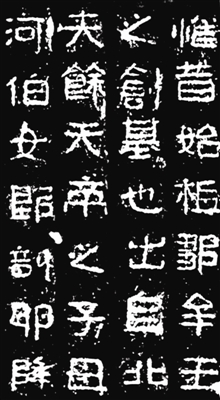
图3 好太王碑书体

  现收藏于集安市博物馆的这枚高句丽铜印,1962年由农民发现于集安县台上乡东明村的耕地中。

  该印印体为双面形制,铜质,长6、宽5.8、厚0.9厘米,印文为隶书、白文、凿刻,四边带有边框,且间以界格,印侧有一圆形穿孔,正面印文为“□天如郎□印”,背面为“癸亥年正月中”(图1、2)。

  该印曾经著录于《集安市文物志》《吉林省文物志》《吉林出土古代官印》等多种文博类书籍。

  关于该印的印文,或因笔画不清,或因生僻难解,学界在释读上存在差别,《吉林省文物志》释作“□天如郎古印”,《吉林出土古代官印》释为“栖天如郎□印”,通化师范学院历史系李乐莹《古代高句丽印章文化探析》释读“  天如郎古印”,首字读“山”音。其实,印文第一字的笔画斑驳难认,释“栖”或“  ”,只是猜测,未必准确;印文第五字是“∟”与“古”的合体,释作“古”字,是参照了字形相近的一个字,似有牵强之嫌。笔者以为,在没有明确的证据之前,此印还是释作“□天如郎□印”为宜。

  关于该印的书体,印文明显是取自好太王碑的隶书字体(图3),呈现笔画平直、方严厚整的风格。隶书入印,有悖于以篆书为基本样式的传统印制,印史中虽有先例,如上世纪50年代湖南长沙西汉墓出土的隶书石印,但多为殉葬的明器,很少作为实用印使用。由此表明,“□天如郎□印”应属民间的私刻作品。

  关于该印的性质,也存在着官、私两说,《吉林省文物志》谓:“似为高句丽地方职官名”。高句丽的官职,两汉至南北朝时期受到中原官制的影响,但也保持了一定的自己特色,由早期的八级发展成后来的为十二级,文献所记载的官名有:相加、对卢、沛者、古雏加、使者、莫离支、主簿、优台、皂衣、先人、大兄、小兄等,并未见有“□天如郎”职称,将其定为地方职官印,没有根据,也属于一种揣测。笔者倾向于该印的私印属性。

  关于该印的年代,背面印文注明为“癸亥年”,这具有年款的性质。学界据此推断,与高句丽较近的有东晋兴宁元年(363)、刘宋景平元年(423)、南齐永明元年(483)三个时间点,当为4世纪中叶至5世纪后叶之间所制造。我们从该印的印文书体来看,其明显是模仿好太王碑笔画平直、方严厚整的隶书(图3),而好太王碑立于东晋安帝义熙十年(414),如此看来,该印的制造时间只能在423年和483年中选择其一,而不会早到好太王碑尚未存在的363年。

  高句丽文化深受中原汉文化的影响,通用汉典,使用汉字。考察高句丽使用的印鉴,早年曾出土有“晋高句丽率善邑长”“晋高句丽率善仟长”“晋高句丽率善佰长”官印三种,但这是晋朝封给高句丽某一邑长的印章,并非为高句丽所制造,目前还无证据可以证明高句丽存在本民族的用印制度。

  “□天如郎□印”是非常少见的高句丽印章,其中的文化内涵可能比我们想象的更为丰富,这有待进一步探索和研究。

 

Related recommendations

Li Zhibin, also known as "Xiaoyaō Zi," shares the same name on Douyin and Kuaishou platforms. He is from Sichuan, has a passion for traditional culture, and is dedicated to arts such as poetry, calligraphy, and music...

Wang Shuangyi, courtesy name Yufei, born in Hebei in 1962, a member of the Communist Party of China, graduated with a college degree in calligraphy. Member of the 10th and 11th Chinese People's Political Consultative Conference of Ningjin County...

Liu Tianjing, also known as Tian Jin. Male, Han ethnicity, born in May 1968, from Longde County, Ningxia. He has studied the calligraphy and theory of the Two Wangs since childhood. Ningxia Calligraphers Association...

Guo Jindong, currently the Vice President and Chairman of the China Commercial Culture Research Association, a specially appointed researcher at the National Museum of China, former Vice President of the China National Academy of Painting, ...

Liu Keren, courtesy name Zilian, also known as Kuai Xue Tang and Si Qi Zhai. Originally from Weifang City, Shandong Province, he is the branch president of the Baisanheishui Painting Academy and vice president of the China National Painting and Calligraphy Academy.

Wang Rong Artistic Biography A native of Datong, Shanxi, currently residing in Beijing. His courtesy name is Yunshi, and his art name is Yunshanzhongren. Director of the Pinggu District Artists Association, Beijing Shanxi Provincial Artists Association...

Empower content monetization

Elevate your income to a new level

Click to contact customer service

Online time: 8:00-16:00

Customer service QQ

88888888

Customer service phone number

400-888-8888

Customer service email

ceotheme@ceo.com

Scan QR code

Follow the WeChat official account

Scan QR code

Visit this site on your mobile device